
A Parent & Caregiver Guide by Bloom To Life
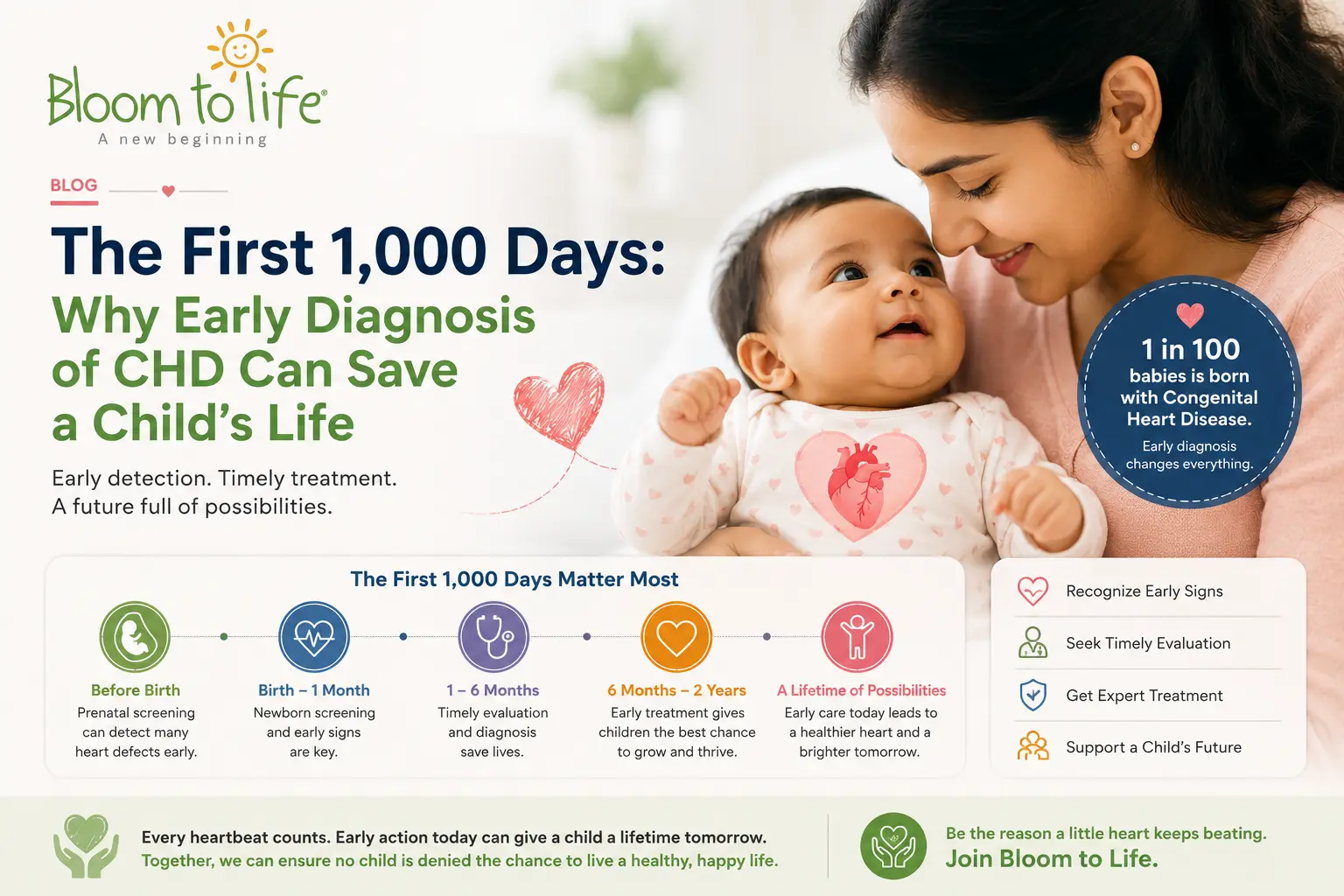
The first 1,000 days—from conception to a child’s second birthday—are the most important period for growth and development. When a baby is born with Congenital Heart Disease (CHD), early diagnosis and timely treatment during this window can make the difference between a lifetime of opportunity and preventable complications.
Why the First 1,000 Days Matter
During infancy, the heart and other organs are rapidly developing. CHD can reduce oxygen delivery and place extra strain on the heart, affecting growth, brain development, nutrition, and overall health. Detecting heart defects early allows doctors to plan treatment before complications become severe.
What is Early Diagnosis?
Early diagnosis means identifying CHD during pregnancy or soon after birth. Many heart defects can be detected through fetal echocardiography, newborn examinations, pulse oximetry screening, and echocardiograms when symptoms are present.
Signs Parents Should Never Ignore
- Difficulty feeding or tiring during feeds
- Rapid or laboured breathing
- Bluish lips, tongue, or fingertips
- Poor weight gain
- Excessive sweating while feeding
- Frequent chest infections
- Unusual sleepiness or low activity
The Cost of Delayed Diagnosis
When CHD goes undetected, babies may develop heart failure, severe infections, poor growth, developmental delays, or life-threatening complications. Delays often increase the complexity of treatment and reduce the chances of the best possible outcome.
How Doctors Diagnose CHD
| Stage | Screening / Test |
|---|---|
| Before Birth | Fetal ultrasound and fetal echocardiography |
| At Birth | Physical examination and pulse oximetry |
| If Symptoms Develop | Echocardiogram, ECG, Chest X-ray, and specialist evaluation |
Treatment Works Best When It's Timely
Many children with CHD can be treated successfully through medication, catheter-based interventions, or surgery. Early referral to a pediatric cardiologist helps ensure the right treatment is delivered at the right time.
A Future Full of Possibilities
Children who receive timely treatment often return to what matters most—playing with friends, celebrating birthdays, attending school, and chasing their dreams. Early diagnosis doesn’t just save lives; it protects childhood.
How Bloom To Life Makes a Difference
For many families, the biggest barrier is not medical expertise but affordability. Bloom To Life connects underserved children with expert pediatric cardiac care, supports life-saving surgeries, and walks alongside families throughout their treatment journey. By removing financial barriers, the organization helps ensure that a diagnosis does not determine a child’s future.
How You Can Help
- Support organizations that fund pediatric heart care.
- Share awareness so more children are diagnosed early.
- Donate to help provide life-saving surgeries.
- Learn the warning signs of CHD.
- Encourage prenatal and newborn screening.
Key Takeaways
- The first 1,000 days are critical for heart and brain development.
- Early diagnosis dramatically improves treatment outcomes.
- Most forms of CHD are treatable when identified in time.
- Every child deserves access to life-saving cardiac care.