
A Parent & Caregiver Guide by Bloom To Life
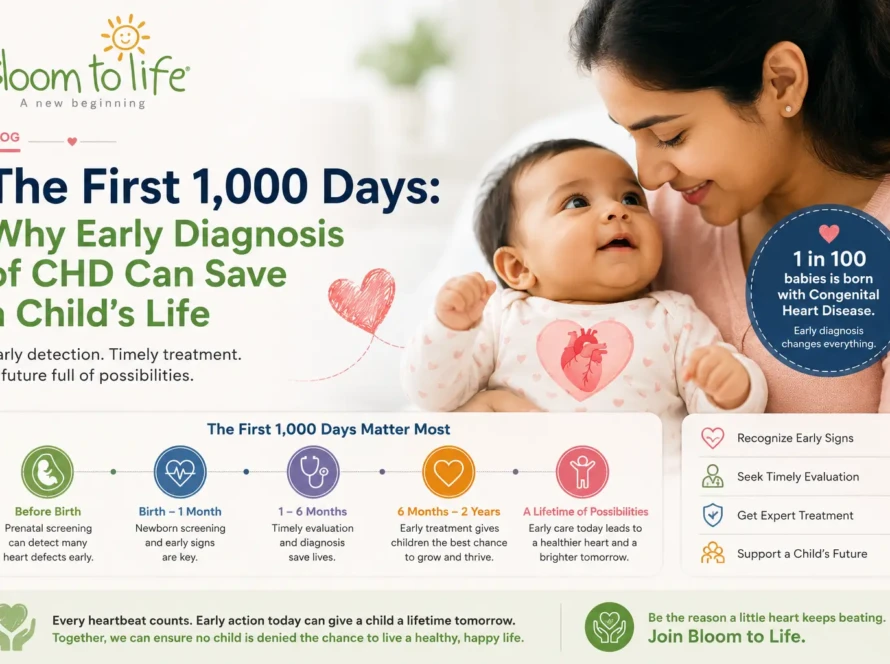
Congenital heart disease (CHD) is among the most common birth defects globally, with far‐reaching impacts for individuals with the disease, their families and society and the economy more broadly. In 2023, 2.3 million children were born with CHD worldwide. That same year, 16 million people were estimated to be living with CHD, an increase on the 11.8 million estimated to have CHD three decades ago.
While there has been minimal change across regions in the CHD incidence rate since 1990, low- and low and middle-income countries (LMICs) suffer from the greatest burden of congenital heart disease, including associated mortality. For example, countries in the Low-Income region have an age standardised mortality rate that is four times higher than those in the High-Income region.
Contributing to the uneven burden of CHD globally are profound inequities in CHD care. Appropriate care requires a systems-level approach over the lifetime for someone with CHD, and depends on clinical excellence and multidisciplinary teams, strong health systems, policy commitment, and sustained investment. In resource-limited settings, developing and executing such programmes faces challenges. For example, paediatric heart programmes and trained professionals specialising in CHD care are largely limited to select large cities in most LMICs, which holds severe implications for timely diagnosis and treatment. Additionally, in most of Africa and many parts of Asia and Latin America, there are no institutions with the capability for infant and newborn heart surgery.
As more people survive into adulthood with CHD, the growing number of this population poses a substantial challenge in even well-resourced settings due to the nuanced level of care required. Adults with CHD can face myriad challenges, including mental health and neurodevelopment conditions, social exclusion, and complications with reproductive health and pregnancy.
There is a path to addressing the shortcomings in CHD care, as the successful implementation of many targeted programmes across both high- and low-resource settings shows. Public investment in centres of excellence, workforce development and the structures required to link CHD care at the community level to tiered systems is a necessary starting point. This must be supported by political commitments that ensure CHD best practice is integrated into the necessary policy and clinical guidelines at national and regional levels. Taking a holistic approach is a crucial step to improving the treatment of CHD and mitigating the far-reaching harms this disease can cause.
To underpin efforts at the national and regional levels, CHD must begin to feature more prominently in the discussion about cardiovascular diseases – an area where it has been all too often neglected. The World Heart Federation (WHF)—with its membership of more than 200 heart foundations, scientific societies, and patient organisations across more than 100 countries—is committed to working with all stakeholders to urgently address inequities in and improve CHD care globally. In support of these efforts, this report provides the following key recommendations:
- All countries should urgently increase national level capacity across the health system to care for people with childhood onset heart disease, including CHD. This includes developing and scaling centres of excellence, improving referral networks from early detection and diagnosis to surgery, long-term follow‐up, and transition to adult care, and integrating congenital heart services into broader maternal, newborn, and child health systems. Ultimately, the goal is to move from episodic, acute care to sustainable, locally led systems capable of delivering timely, high-quality population level services ensuring continuity of care across the lifespan. Such programmes require sustained investment with inclusion of CHD services into UHC benefits packages to avoid financial hardship or catastrophic costs for affected families.
- Countries should invest in training and building the paediatric and congenital cardiac workforce and strengthening capacity of the adult CHD workforce. This includes training and retaining multidisciplinary specialized paediatric and congenital cardiac care teams and requires developing national CHD health workforce development plans based on population needs forecasting that include development of formal training pathways.
- Countries and international bodies should work together to improve CHD surveillance and close the data gap to enhance the understanding of CHD epidemiology and determinants. This requires strengthening national health information systems to capture data on CHD prevalence, outcomes, and service delivery, such as through population level registries. Such data should include more granular and comparable information on subtypes of CHD. Better data would enable countries to improve care delivery based on quality improvement metrics, plan and allocate resources more effectively, and track progress over time.
- Policymakers at international and national level must ensure CHD is reflected in relevant policy frameworks. NCD, maternal and child health and surgical policy initiatives should include measures to improve access to, and quality of, CHD care across the care continuum. This can further support the aims of such policies to reduce NCD and infant mortality, in alignment with the Sustainable Development Goals. Furthermore, policymakers should support the development of national, context-appropriate guidelines to improve implementation of best practice and CHD outcomes.
- Advocates for CHD care should work to amplify the voices of CHD patients and their families to drive efforts forward. Lived experiences provide unique insights that can inform service delivery, research priorities, and support systems. Empowering patient organisations fosters a patient-centred approach to care and ensures that the needs of those affected are at the forefront of global efforts.
- Civil society, including national NCD and CVD organizations,should support the campaign for a 2027 WHA Resolution on Childhood-Onset Heart Disease. The resolution will help achieve Universal Health Coverage and reductions in preventable deaths of newborns and children under five, by ensuring countries have paediatric and congenital cardiac care as an integral part of the national health system. Advocates can use resources provided by the Global Coalition for Pediatric and Congenital Hearts to plan and implement national campaigns.
To Read the full report – Click Here